Security Compliance
Bitget uses two-factor authentication, sends alerts for logins and withdrawals, and offers an anti-phishing code to verify genuine emails. It maintains a protection fund of over $300 million to compensate users for losses where they're not at fault, and publishes monthly Proof of Reserves. Worth knowing: Bitget has had at least one security incident in its history and has been criticized for limited transparency around it.
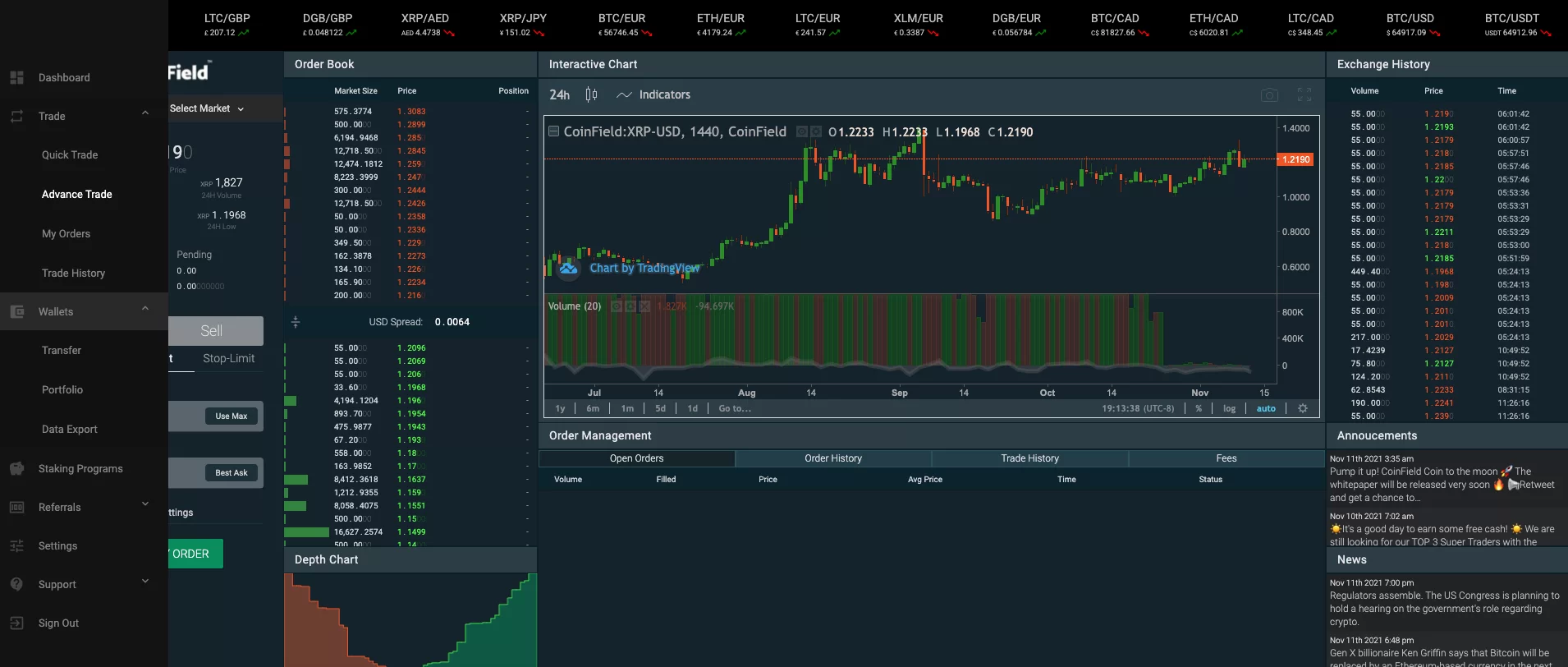
CoinField marketed itself as a highly secure exchange using cold storage, multi-signature wallets and encryption. The regulatory record tells a different story: the OSC found the platform did not have sufficient crypto assets in custody to satisfy investor withdrawal requests and misled both investors and the regulator about why withdrawals were delayed. Whatever its technical security, customer funds were not safe. This is a textbook example of why we recommend holding your own coins in your own crypto wallet rather than leaving them on any exchange.
Bitget uses two-factor authentication, sends alerts for logins and withdrawals, and offers an anti-phishing code to verify genuine emails. It maintains a protection fund of over $300 million to compensate users for losses where they're not at fault — this is a company-run fund, not third-party insurance. It publishes monthly Proof of Reserves. Since Bitget is not accessible from Canada, its security arrangements are academic for Canadian readers.
CoinField marketed itself as a highly secure exchange using cold storage, multi-signature wallets and encryption. The regulatory record tells a different story: the OSC found the platform did not have sufficient crypto assets in custody to satisfy investor withdrawal requests and misled both investors and the regulator about why withdrawals were delayed. Whatever its technical security, customer funds were not safe.
Bitget has a company-run $300M+ protection fund and monthly Proof of Reserves — academic for Canadians since it is not accessible here. CoinField marketed itself as secure but the OSC found it misled investors about the state of customer funds. Neither platform is relevant to Canadians going forward.
Regulatory Compliance
Bitget is not registered with Canadian securities regulators and, as of 2026, Canada sits on its list of restricted jurisdictions. The Alberta Securities Commission had already warned investors that Bitget was not registered in the province before the broader restriction took effect. Canadians should avoid workarounds like VPNs, which breach Bitget's terms and put funds at risk of being frozen.
CoinField's FINTRAC registration was ceased, and the company was never registered with Canadian securities regulators. In August 2024, Ontario's Capital Markets Tribunal found it violated securities law through unregistered trading, illegal distribution and misleading investors, and in 2025 it was permanently banned from Ontario's capital markets with over $3 million in combined penalties, disgorgement and costs. CoinField did not participate in the proceedings.
Bitget is not registered with Canadian securities regulators and, as of 2026, Canada sits on its list of restricted jurisdictions. The Alberta Securities Commission had already warned investors that Bitget was not registered in the province before the broader restriction took effect. Canadians should avoid workarounds like VPNs, which breach Bitget's terms and put funds at risk of being frozen.
CoinField's FINTRAC registration was ceased, and the company was never registered with Canadian securities regulators. In August 2024, Ontario's Capital Markets Tribunal found it violated securities law through unregistered trading, illegal distribution and misleading investors. In 2025 it was permanently banned from Ontario's capital markets with over $3 million in combined penalties, disgorgement and costs. CoinField did not participate in the proceedings.
Neither Bitget nor CoinField is authorized to serve Canadian retail crypto investors. Bitget was never registered and restricted Canada following regulatory pressure in 2026. CoinField's FINTRAC registration was ceased, and it was permanently banned from Ontario's capital markets in 2025 for securities violations.
Customer support
Reviewers frequently describe Bitget's customer support as slow or unhelpful, particularly for complex issues involving futures or copy trading. That matters less now for Canadian readers, since the platform is closed to them, but anyone with a legacy account trying to withdraw remaining funds should be prepared for a slow support process.
There is no customer support because there is no company left to contact. Former customers with unfulfilled withdrawals were harmed when the platform collapsed, and the tribunal noted the total harm to investors remains uncertain. If you were affected, you can report your experience to the OSC. If anyone contacts you claiming to recover your lost CoinField funds for a fee, that is a recovery scam, a common second-wave fraud targeting victims of collapsed exchanges.
Reviewers frequently describe Bitget's customer support as slow or unhelpful, particularly for complex issues involving futures or copy trading. That matters less now for Canadian readers, since the platform is closed to them, but anyone with a legacy account trying to withdraw remaining funds should be prepared for friction.
There is no CoinField customer support because there is no company left to contact. Former customers with unfulfilled withdrawals were harmed when the platform collapsed. If you were affected, you can report your experience to the OSC. If anyone contacts you claiming to recover your lost CoinField funds for a fee, that is a recovery scam.
Neither platform has relevant ongoing support for Canadians. Bitget support is relevant only for recovering legacy funds; CoinField has no support function at all.
Conclusion
From a Canadian perspective, there is nothing to choose between Bitget and CoinField — neither is available, and for very different reasons.
Bitget restricted Canadian users in early 2026 following new CSA guidance and was never registered with Canadian securities regulators. If you have legacy funds on Bitget, contact support and request withdrawal to an external wallet — be prepared for friction.
CoinField is not a legitimate operating exchange. It collapsed in 2023 with unfulfilled customer withdrawals, was permanently banned from Ontario's capital markets in 2025, and impostor scam sites now operate under its name. Avoid any site presenting itself as CoinField. If you were a CoinField customer with unmet withdrawals, report your experience to the OSC. If anyone contacts you offering to recover your funds for a fee, that is a recovery scam.
For Canadians looking for well-regulated alternatives, we recommend Kraken (200+ coins, nationally registered restricted dealer since April 2025), Crypto.com (400+ coins, restricted dealer since May 2025), or NDAX (60+ coins, CIRO investment dealer with a flat 0.2% fee). See our full list of the best crypto exchanges in Canada for more options.