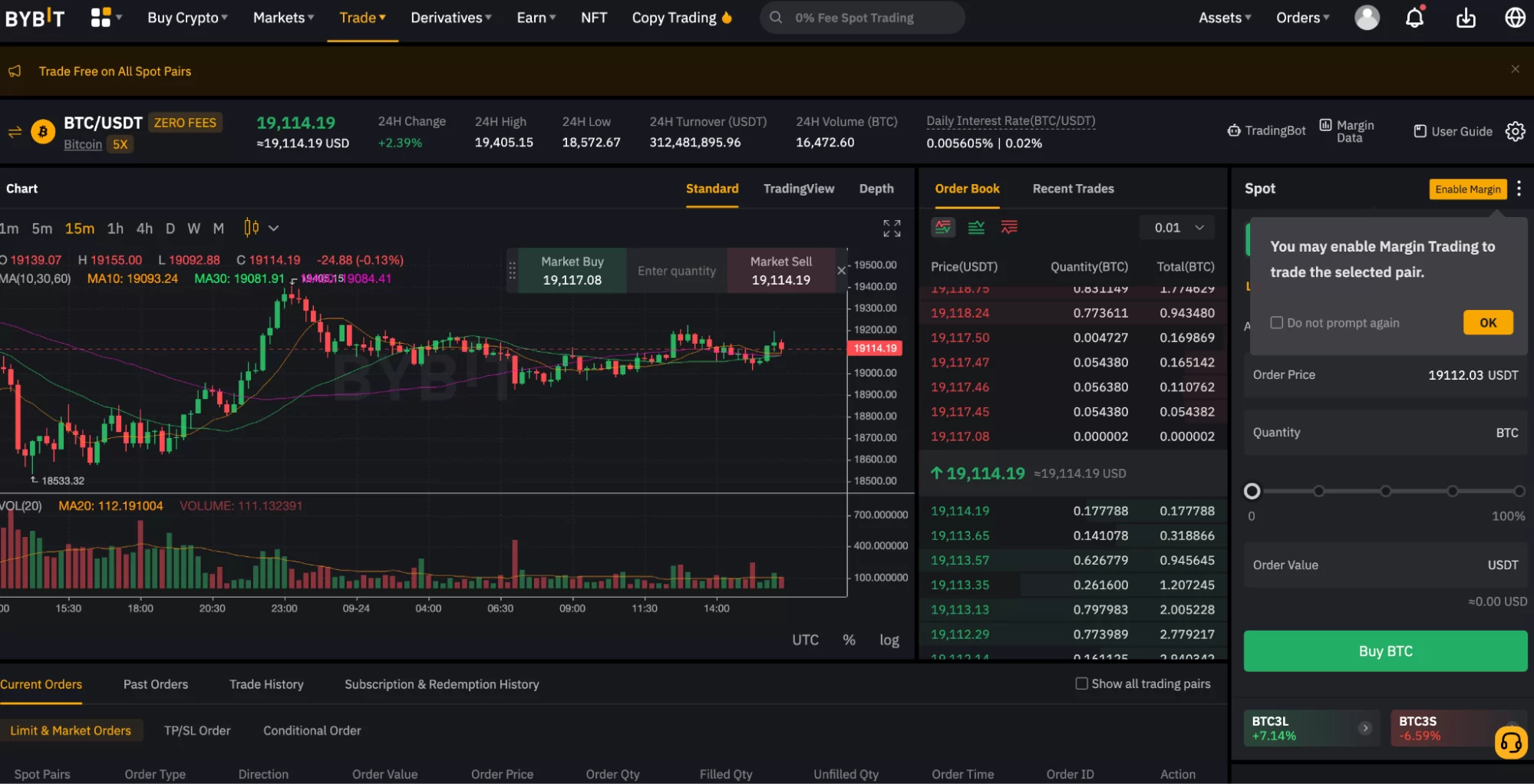
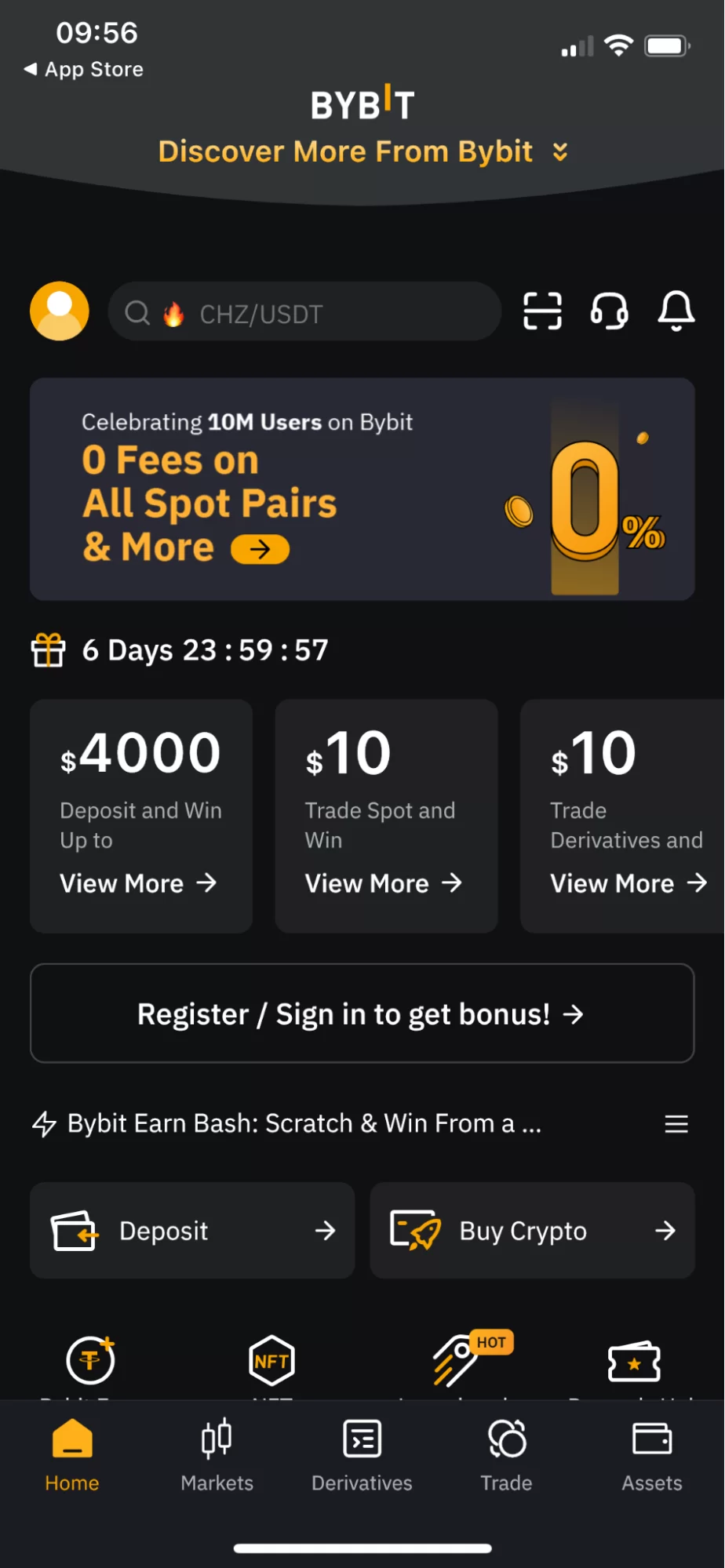
Security Compliance
ByBit's security record now carries a major asterisk. In February 2025, attackers linked to North Korea's Lazarus Group exploited ByBit's multi-signature wallet transfer process and stole roughly $1.5 billion in Ethereum, the largest crypto theft ever recorded. To ByBit's credit, no customers lost funds: the exchange covered all losses from its own liquidity and replenished reserves within about 72 hours, a crisis response widely considered the best the industry has seen. Still, the breach shows that even cold storage and multisig setups can be defeated. Users can secure their accounts with two-factor authentication via Google Authenticator. ByBit also previously ran into trouble in Canada specifically, paying a roughly $2.5 million penalty to the Ontario Securities Commission in 2022 for operating without registration.
Coinbase keeps around 98% of customer crypto in cold storage with multi-signature wallets, making theft extremely difficult even if systems are compromised, and backs custodied assets with substantial crime insurance. It undergoes SOC 1 and SOC 2 audits and, as a public company, publishes quarterly audited financials, a level of transparency almost no competitor matches. Note that Coinbase also offers the separate, non-custodial Coinbase Wallet app for self-custody, which is distinct from holding coins on the exchange.
ByBit's security record now carries a major asterisk. In February 2025, attackers linked to North Korea's Lazarus Group exploited ByBit's multi-signature wallet transfer process and stole roughly $1.5 billion in Ethereum, the largest crypto theft ever recorded. To ByBit's credit, no customers lost funds: the exchange covered all losses from its own liquidity and replenished reserves within about 72 hours, a crisis response widely considered the best the industry has seen. Still, the breach shows that even cold storage and multisig setups can be defeated. This is academic for Canadians, since ByBit is unavailable entirely.
Coinbase keeps around 98% of customer crypto in cold storage with multi-signature wallets, making theft extremely difficult even if systems are compromised, and backs custodied assets with substantial crime insurance. It undergoes SOC 1 and SOC 2 audits and, as a public company, publishes quarterly audited financials, a level of transparency almost no competitor matches. Note that Coinbase also offers the separate, non-custodial Coinbase Wallet app for self-custody, which is distinct from holding coins on the exchange.
ByBit suffered the largest crypto hack in history in February 2025 (~$1.5B ETH) but fully reimbursed all affected users — not relevant for Canadians since ByBit is unavailable. Coinbase keeps 98% of assets in cold storage with SOC 2 Type II certification and public-company audit credentials. Only Coinbase is relevant for Canadian users here.
Regulatory Compliance
ByBit exited the Canadian market in 2023 due to Canadian regulations and Canada remains on its restricted jurisdictions list. Notably, ByBit has since obtained licenses elsewhere, including a MiCA license serving the EEA through ByBit EU and a UK relaunch in late 2025, but it has shown no intention of registering with Canadian regulators.
Coinbase went from unregistered convenience to the most credentialed international platform in Canada: it signed an Enhanced Pre-Registration Undertaking in March 2023, formally launched with Interac rails in August 2023, and became a CSA-registered Restricted Dealer in April 2024, the first international exchange to achieve this. It's registered with FINTRAC as an MSB and authorized in Quebec by the AMF. Canadians can use the platform fully, with the standard restricted dealer caveats: certain altcoin purchase limits and no CIPF coverage on crypto.
ByBit exited the Canadian market in September 2023 due to Canadian regulations and Canada remains on its restricted jurisdictions list. ByBit paid a roughly $2.5 million OSC penalty for operating without registration in Ontario, then exited all of Canada rather than register. Notably, ByBit has since obtained licenses elsewhere, including a MiCA license serving the EEA through ByBit EU and a UK relaunch in late 2025, but it has shown no intention of registering with Canadian regulators.
Coinbase went from unregistered to the most credentialed international platform in Canada: it signed an Enhanced Pre-Registration Undertaking in March 2023, formally launched with Interac rails in August 2023, and became a CSA-registered Restricted Dealer in April 2024, the first international exchange to achieve this. It's registered with FINTRAC as an MSB and authorized in Quebec by the AMF. Canadians can use the platform fully, with the standard restricted dealer caveats: certain altcoin purchase limits and no CIPF coverage on crypto.
ByBit paid a roughly $2.5 million OSC penalty and exited all of Canada in September 2023 — not merely "restricted new account sign-ups from Ontario residents." Coinbase is registered with FINTRAC — not FinCEN, which is a US regulator — and operates as a CSA Restricted Dealer in every Canadian province and territory.
Customer support
ByBit has a helpful support centre on its website with numerous guides about crypto and how to use the exchange, plus ticket-based and chat support. For Canadians this is academic, since the platform is off-limits entirely.
Coinbase offers 24/7 support with live chat, a comprehensive help centre and an extensive learning hub. Support quality remains its weak spot: reaching a human who understands Canadian banking specifics can take patience, and our own test took four days to get a real person. For routine issues the automated help works fine, but complex account problems can drag.
ByBit has a helpful support centre on its website with numerous guides about crypto and how to use the exchange, plus ticket-based and chat support. For Canadians this is academic, since the platform is off-limits entirely.
Coinbase offers 24/7 support with live chat, a comprehensive help centre and an extensive learning hub. Support quality remains its weak spot: reaching a human who understands Canadian banking specifics can take patience, and our own test took four days to get a real person. For routine issues the automated help works fine, but complex account problems can drag.
Coinbase's 24/7 live chat is the only relevant support option for Canadians. ByBit's support is not accessible to Canadians. Neither platform offers phone support for crypto in Canada.
Conclusion
ByBit is not available to Canadians. It exited the Canadian market on September 30, 2023, paid a roughly $2.5 million OSC penalty, and Canada remains on its restricted jurisdictions list. If you have legacy funds on ByBit, withdraw them to your own wallet before attempting to transfer anywhere else.
Coinbase is the clear choice for Canadians. As the first international exchange to achieve restricted dealer registration in Canada in April 2024, it offers 200+ coins, free Interac deposits, a polished beginner interface, Advanced Trade for lower fees on volume, USDC rewards around 3.5%, and the transparency of a publicly traded S&P 500 company with audited financials. The main caveats are high simple-interface fees (always use Advanced Trade), inconsistent support, and the Interac name-matching pitfall that trips up some new users.
We recommend choosing Coinbase over ByBit for your cryptocurrency trading needs. By using our referral link, you support us in conducting comprehensive independent analyses of crypto trading options for Canadians.
If you find that Coinbase doesn't meet your requirements, we encourage you to explore our monthly-updated list of the best exchanges for Canadians to trade crypto.