All of our content is written by Canadian crypto experts, not robots. We ensure each article is reviewed and updated regularly. Learn More

We earn commissions through referral links to crypto exchanges and products on this site. However, this does not impact our reviews or ratings. Learn More

Listen

Kucoin vs Netcoins: What Works Better For Canadians in 2026

Oleg Galeev

Last updated July 14, 2026

In this analysis, we compare KuCoin and Netcoins, two cryptocurrency exchanges accessed by users in Canada. From a Canadian perspective the comparison is one-sided: KuCoin is permanently banned in Canada following an OSC ruling and appears on the CSA’s banned platform list nationwide. Netcoins is a Vancouver-based CSA Restricted Dealer backed by publicly traded BIGG Digital Assets, fully available in every province.

Description

KuCoin is a Seychelles-based cryptocurrency exchange known for its huge altcoin selection, futures trading and trading bots, serving tens of millions of users worldwide. It is NOT available to Canadians: KuCoin is permanently banned from Ontario's capital markets, appears on the CSA's banned platform list, and requires mandatory identity verification that blocks Canadian sign-ups.

Netcoins is a Vancouver-based Canadian crypto exchange founded in 2014 and owned by publicly traded BIGG Digital Assets (TSXV: BIGG). One of the first platforms registered with Canadian securities regulators, it focuses on making crypto simple for beginners, with a flat, transparent fee and free Interac funding.

Coins

700+ (not accessible from Canada)

60+ cryptocurrencies including Bitcoin, Ethereum, Solana, XRP, Cardano, DOGE, SHIB, USDC, Avalanche and Polkadot.

Fees

  • Low maker/taker trading fees starting around 0.1%/0.1%, decreasing with VIP level
  • Free crypto deposits, variable withdrawal fees
  • KCS holders get a 20% discount on trading fees
  • Flat 0.5% trading fee (note the spread on top, the industry's usual hidden cost)
  • Free CAD deposits and withdrawals via Interac e-Transfer
  • Wire deposits of $3,000 or less carry a $30 fee (free above), wire withdrawals of $25,000 or less carry a $50 fee (free above)
  • Crypto withdrawal fees vary by coin, generally below industry average

Pros

  • Huge range of altcoins
  • Advanced order types, futures, lending and trading bots
  • Low fees
  • Licensed in some regions (MiCA in the EU via Austria, AUSTRAC in Australia)

None of this is available to Canadians.

  • Registered Restricted Dealer with the CSA in all provinces, plus FINTRAC MSB registration
  • Free Interac funding and withdrawals
  • Flat, easy-to-understand 0.5% fee
  • Instant automated verification, account open in about two minutes
  • Netcoins Visa card with 3% bitcoin cashback (except Quebec)
  • Staking available on select coins, with regulatory approval
  • USD accepted alongside CAD
  • Credit card purchases available via Simplex
  • Phone, chat and email support 7 days a week
  • Owned by a publicly traded company with audited financials
  • OTC desk for large trades

Cons

  • Permanently banned from Ontario's capital markets with roughly $2 million in penalties, a ruling reciprocated across Canada
  • Mandatory KYC since July 2023 ended anonymous trading entirely
  • VPN use is banned under its own terms, and KuCoin can freeze accounts and withhold funds from users dodging geo-blocks
  • Hacked for $275 million in 2020
  • Guilty plea in the US with ~$297 million in penalties and an indefinite bar from serving US residents
  • Regulated Canadian exchanges have blocked incoming transfers from KuCoin
  • Fewer coins than the biggest platforms
  • No advanced charting, order types or pro trading features
  • Wire fees sting below the free thresholds
  • Spread on top of the 0.5% fee makes small trades pricier than they look

Account Limits

n/a for Canadians. Elsewhere, limits depend on KYC tier, and unverified legacy accounts can only sell or withdraw, not deposit or trade.

  • $10 minimum for Interac e-Transfer
  • $500 minimum for wire transfer
  • Cash withdrawals under $10,000 go by e-Transfer, larger amounts by wire

Methods to buy

Canadians cannot buy crypto on KuCoin. Verification requires ID from a supported country, and Canada isn't one. If you're a legacy user with funds still on the platform, withdraw them, but note that transfers arriving at regulated Canadian exchanges directly from KuCoin may be blocked, so route through your own crypto wallet first. For exchanges that legally serve Canadians, see our best crypto exchanges in Canada.

  • Interac e-Transfer
  • Bank wire (CAD or USD)
  • Online bill payment
  • Credit card via Simplex
  • Crypto deposits

Security

  • $275 million stolen in the 2020 hack attributed to North Korean hackers, with around $200 million later recovered
  • 2FA available
  • Mandatory KYC and tightened compliance since 2023
  • Majority of client assets in BitGo cold storage with keys held offline, hot wallets secured via Fireblocks
  • Multi-signature wallets and mandatory 2FA for withdrawals
  • Blockchain surveillance via its parent company's compliance tools monitoring transactions for fraud and criminal connections
  • Operating since 2014 with no hacks

Mobile and Desktop Trading

KuCoin's platform remains dense and trader-focused — none of which is accessible to Canadians since full KYC blocks Canadian sign-ups. Netcoins has a 4.0-star rating on the Apple App Store and 4.0 stars on Google Play.

KuCoin

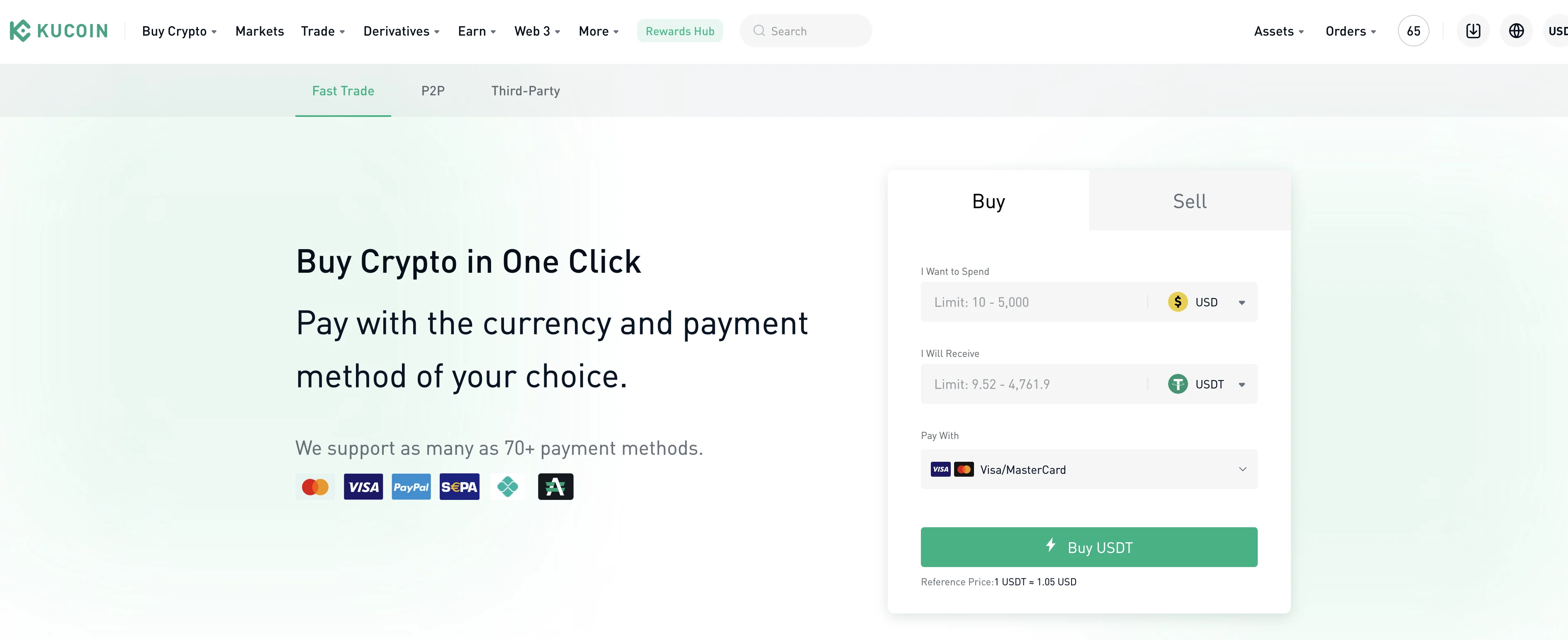
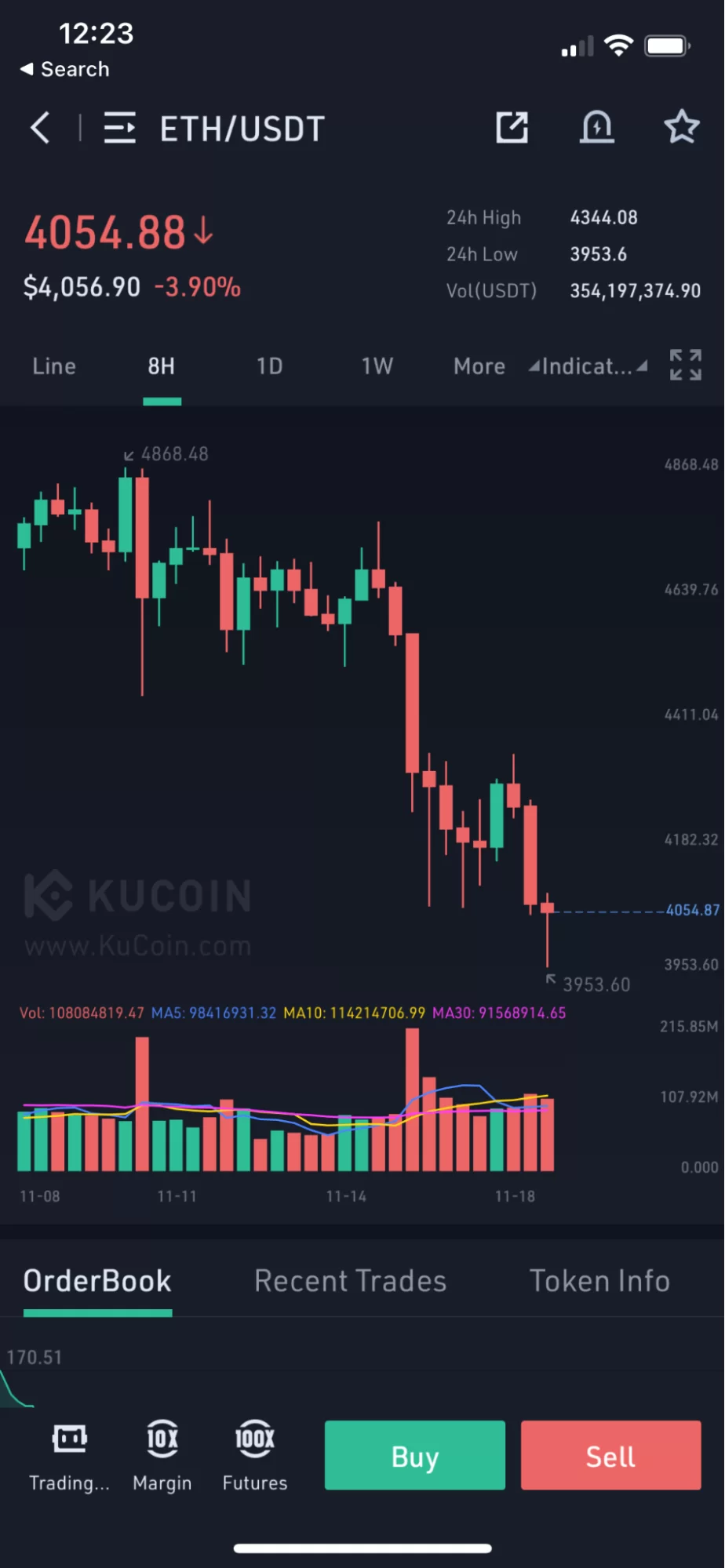
KuCoin's platform remains dense and trader-focused, with advanced charting, margin, futures and bot trading spread across many tabs and menus. The old no-KYC signup flow no longer exists: full identity verification now gates all trading for everyone, and Canadians fail that gate entirely.

Netcoins

Netcoins' platform is simple and clean, with instant (market) and limit orders and a dashboard built around two big options: deposit funds or deposit crypto. The mobile app mirrors the desktop platform and is genuinely beginner-friendly. Advanced traders will find it too basic, which is by design.

Kucoin

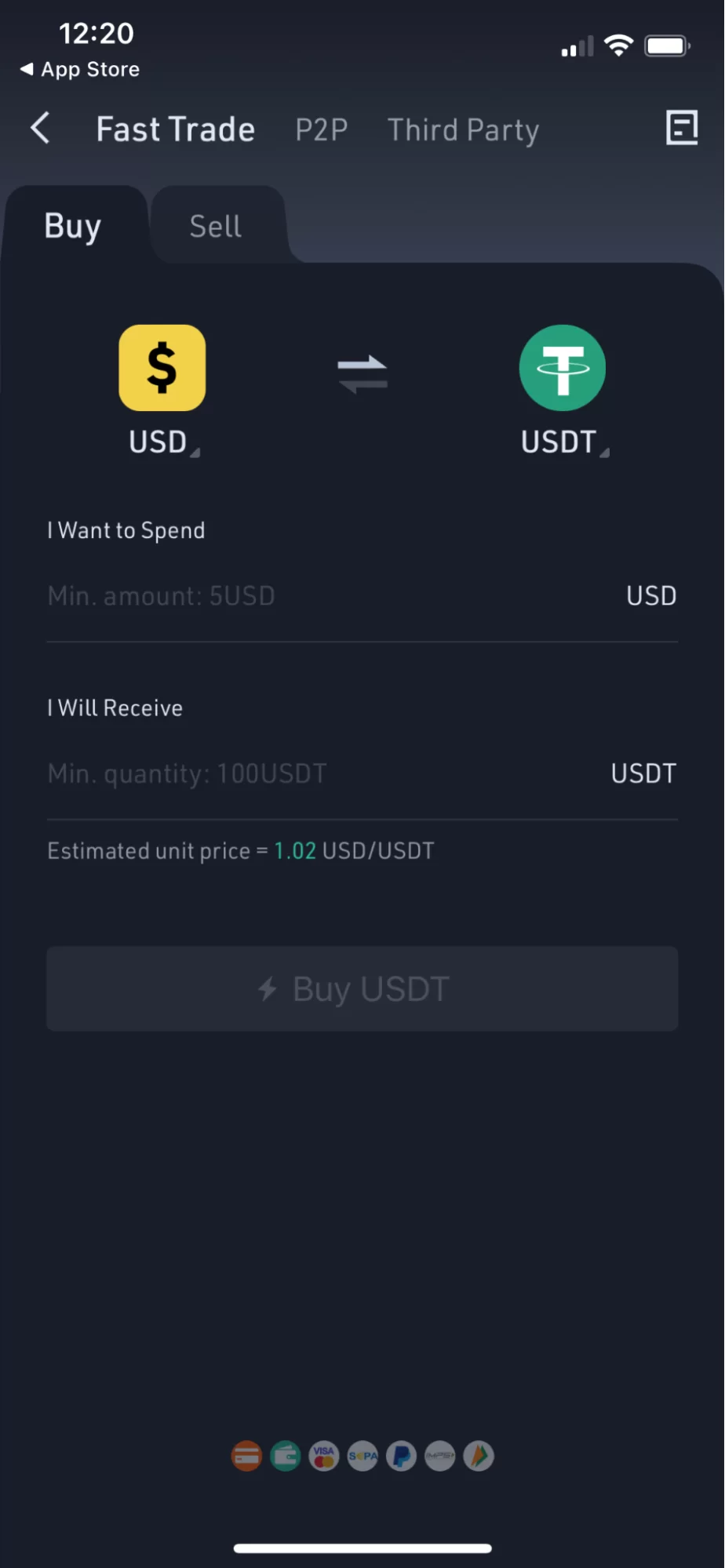
KuCoin's platform remains dense and trader-focused, with advanced charting, margin, futures and bot trading spread across many tabs and menus. The old flow this review used to describe, signing up with just an email and buying USDT in seconds, no longer exists anywhere: full identity verification now gates trading for everyone, and Canadians fail that gate entirely.

Kucoin crypto exchange desktop interface

Kucoin desktop interface

Kucoin desktop app (Fast Trade)

Kucoin desktop app (Fast Trade)

Kucoin app screenshot

Kucoin app interface

Kucoin app while trading

Kucoin app interface while trading

Netcoins

Netcoins' platform is simple and clean, with instant (market) and limit orders and a dashboard built around two big options: deposit funds or deposit crypto. The mobile app mirrors the desktop platform and is genuinely beginner-friendly. Advanced traders will find it too basic, which is by design.

Netcoins trading screen

Netcoins Desktop App (trading screen)

Funding money to our account with Netcoins

Netcoins Desktop App (funding account)

Netcoins vs Coinsmart trading mobile app

Netcoins Mobile App (balances)

Netcoins vs Coinsmart bitcoin transaction in mobile app

Netcoins Mobile App (trading)

Security Compliance

KuCoin offers two-factor authentication and has tightened compliance considerably since its early years. Its history still matters though: $275 million was stolen by North Korean hackers in 2020, with about $200 million recovered, and in 2025 its operator pleaded guilty in the US to anti-money-laundering failures. If you somehow still have funds on the exchange, move them to a private crypto wallet.

Netcoins keeps the majority of client crypto in cold storage with custodian BitGo, whose private keys live in air-gapped offline systems, while hot wallet operations run through Fireblocks. Two-factor authentication is mandatory for withdrawals, and multi-signature wallets add another layer. Its parent company's blockchain surveillance technology monitors wallet addresses and transactions for fraud and links to criminal enterprises. Netcoins has operated since 2014 without a hack.

KuCoin offers two-factor authentication and has tightened compliance considerably since its early years. Its history still matters: $275 million was stolen by North Korean hackers in 2020, with about $200 million later recovered — one of the largest exchange hacks on record. In 2025 its operator pleaded guilty in the US to anti-money-laundering failures with ~$297 million in penalties. If you still have funds on the exchange, move them to a private crypto wallet — but note that incoming transfers from KuCoin may be blocked by regulated Canadian exchanges, so withdraw to your own wallet first and then transfer from there.

Netcoins keeps the majority of client crypto in cold storage with custodian BitGo, whose private keys live in air-gapped offline systems, while hot wallet operations run through Fireblocks. Two-factor authentication is mandatory for withdrawals, and multi-signature wallets add another layer. Its parent company's blockchain surveillance technology monitors wallet addresses and transactions for fraud and links to criminal enterprises. Netcoins has operated since 2014 without a hack.

KuCoin has tightened its security posture post-2020 but its $275M hack history and US guilty plea are major red flags regardless of geography. Netcoins publishes full custody details: BitGo cold storage with air-gapped keys and Fireblocks for hot wallets, plus blockchain surveillance. Since KuCoin is not available to Canadians, only Netcoins' security is relevant here.

Regulatory Compliance

KuCoin is banned in Canada. After ignoring OSC proceedings entirely, KuCoin received a permanent ban from Ontario's capital markets in June 2022 along with the maximum penalties the tribunal could impose, about $2 million plus costs, and the CSA lists it as a banned platform nationwide. Mandatory KYC since July 2023 means there is no longer any workaround, and using a VPN violates KuCoin's own terms with the risk of frozen funds and zero consumer protection or legal recourse in Canada. This is a hard no for Canadians, not a grey area.

Netcoins is one of the most regulated exchanges in Canada. Beyond its FINTRAC MSB registration, it has been registered as a Restricted Dealer with the Canadian securities regulators in every province since 2021, among the very first platforms to achieve this, and is working toward full investment dealer registration and CIRO membership. Its parent, BIGG Digital Assets, is publicly traded and must publish audited financial statements, adding a transparency layer most private exchanges can't match.

KuCoin is banned in Canada. After ignoring OSC proceedings entirely, KuCoin received a permanent ban from Ontario's capital markets in June 2022 along with the maximum penalties the tribunal could impose — about $2 million plus costs. The CSA lists it as a banned platform nationwide — not just Ontario. Mandatory KYC since July 2023 means there is no longer any workaround, and using a VPN violates KuCoin's own terms with the risk of frozen funds and zero consumer protection or legal recourse in Canada. This is a hard no for Canadians, not a grey area.

Netcoins is one of the most regulated exchanges in Canada. Beyond its FINTRAC MSB registration, it has been registered as a Restricted Dealer with the Canadian securities regulators in every province since 2021, among the very first platforms to achieve this, and is working toward full investment dealer registration and CIRO membership. Its parent, BIGG Digital Assets, is publicly traded and must publish audited financial statements, adding a transparency layer most private exchanges can't match.

KuCoin is permanently banned from Canadian capital markets nationwide and is not registered with Canadian securities regulators. Netcoins is registered with FINTRAC and operates as a CSA Restricted Dealer in every Canadian province and territory.

Customer support

KuCoin offers FAQs, an online ticketing system and 24/7 live chat for users in supported countries. For Canadians the only relevant support scenario is recovering legacy funds, and be prepared for friction, since closed-jurisdiction withdrawals often involve extra verification steps.

Netcoins offers email, live chat and phone support seven days a week, and phone support remains rare among crypto exchanges. Its reputation for customer service is strong, with reviewers consistently praising the fast, human support and quick verification, though some negative reviews cite blocked withdrawals during compliance checks. Check the live Trustpilot page for the current rating before quoting a number.

KuCoin offers FAQs, an online ticketing system and 24/7 live chat for users in supported countries. For Canadians the only relevant support scenario is recovering legacy funds, and be prepared for friction since closed-jurisdiction withdrawals often involve extra verification steps.

Netcoins offers email, live chat and phone support seven days a week, and phone support remains rare among crypto exchanges. Its reputation for customer service is strong, with reviewers consistently praising the fast, human support and quick verification, though some negative reviews cite blocked withdrawals during compliance checks.

Netcoins' seven-days-a-week phone, chat and email support is the only relevant option for Canadians. KuCoin's support is relevant only for recovering legacy funds, where expect friction.

Conclusion

From a Canadian perspective, this comparison has a clear answer. KuCoin is permanently banned in Canada — the CSA lists it as a banned platform nationwide, not just in Ontario — and was hacked for $275 million in 2020. Recommending it for Canadians is wrong on every level.

Netcoins is the clear choice. As a CSA Restricted Dealer backed by publicly traded BIGG Digital Assets, it is one of the most transparent and compliant exchanges in Canada. Free Interac deposits, a flat 0.5% fee, a Visa card with 3% bitcoin cashback, staking on select coins with regulatory approval, credit card purchases via Simplex, and seven-days-a-week phone support make it a well-rounded platform for beginners and intermediate traders. The 0.5% fee plus spread combination is worth modelling for active traders — at that point NDAX's 0.2% flat fee may serve you better.

If you have legacy funds on KuCoin, withdraw them to your own wallet immediately — do not transfer directly to a regulated Canadian exchange, as some platforms block incoming transfers from KuCoin. Route through your own wallet first.

We recommend choosing Netcoins over KuCoin for your cryptocurrency trading needs. By using our referral link, you get $25 and support us in conducting comprehensive independent analyses of crypto trading options for Canadians.

If you find that neither KuCoin nor Netcoins meets your requirements, we encourage you to explore our monthly-updated list of the best exchanges for Canadians to trade crypto.

Author

Oleg is a Canadian citizen & crypto expert who has been trading since 2016. He started out with Coinbase, Kraken and Peer-to-Peer exchanges. After some time, centralized exchanges started charging crazy fees to their users.

He decided to review different crypto exchanges that operate in Canada and start a Youtube channel in order to educate Canadians on what kinds of things are going inside each one while giving them unbiased advice. On top of that, Oleg also has experience with NFT, airdrops, and crypto staking and he is constantly checking on new crypto assets.

His writing has been featured in popular Canadian media sources such as Toronto Sun and Ottawa Citizen. 

Discover Your Perfect Canadian Crypto Exchange!